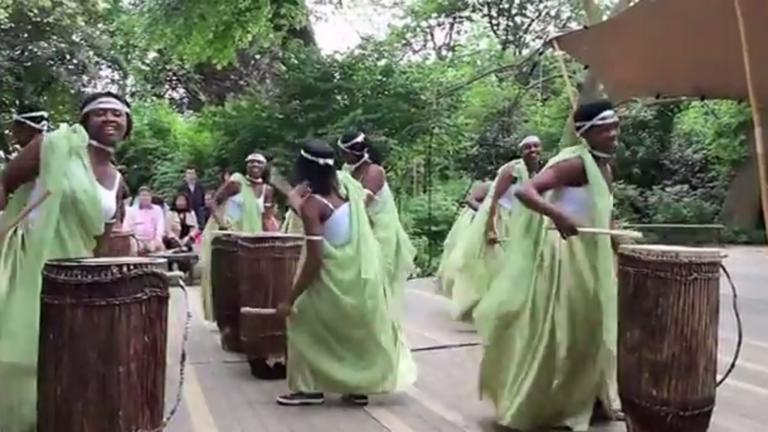


When Intore dancers take the stage, the drums speak first. Then come the leaps — performers in white and black, spears in hand, moving in rhythms that have travelled centuries and now captivate audiences from Kigali to Berlin.
Intore, meaning “the chosen ones”, was once a royal warrior dance performed for the court. Today it is Rwanda’s most recognisable cultural export, staged at national celebrations, weddings, and international festivals — and taught in academies across the country.
The anatomy of the dance
An Intore performance is a composition of parts. The drumming sets tempo and structure. The dancers’ leaps and kicks are athletic and synchronised, traditionally performed in lines. The headdress — a towering crown of sisal fibres — is the visual signature, once reserved for royalty and now worn by performers who carry the tradition into a modern repertoire.
Put your brand in front of 12,000 engaged readers
Display · Newsletter · Sponsored features
Costumes have evolved, but the grammar remains: call and response between drums and dancers, sudden accelerations, and a climax of leaps that draws gasps from first-time audiences.
When we dance, we are telling our history with our bodies.

From court to country to world
After 1994, Intore was deliberately revived as a symbol of national unity — a tradition that predated colonial borders and could be shared by all Rwandans. National ensembles were formed, competitions organised, and the dance embedded in school and community celebrations.
International touring followed. Rwandan troupes now perform in Europe, Asia, and North America, and their choreography is taught in university programmes abroad. At home, dance academies fill every year with young performers who grew up watching Intore on television.
- Where to see it: national celebrations, hotel and cultural-village performances, and festival stages
- What to listen for: the ingoma drums, whose patterns cue every movement
- What to watch: the headdress, the leaps, and the synchronised lines

Tradition, remixed
The style keeps evolving. Contemporary choreographers blend Intore with modern dance, gospel, and hip-hop, and women’s drumming groups — historically excluded from the tradition — have become a significant force, challenging assumptions about who may perform.
Purists caution against dilution, and there is real debate about how much reinvention a tradition can absorb. What is not in dispute is the dance’s power: a form that survived the collapse of the monarchy, decades of upheaval, and a genocide, and emerged as a source of pride.
For visitors, an Intore performance is the most direct encounter with Rwandan culture available — loud, physical, and impossible to forget.