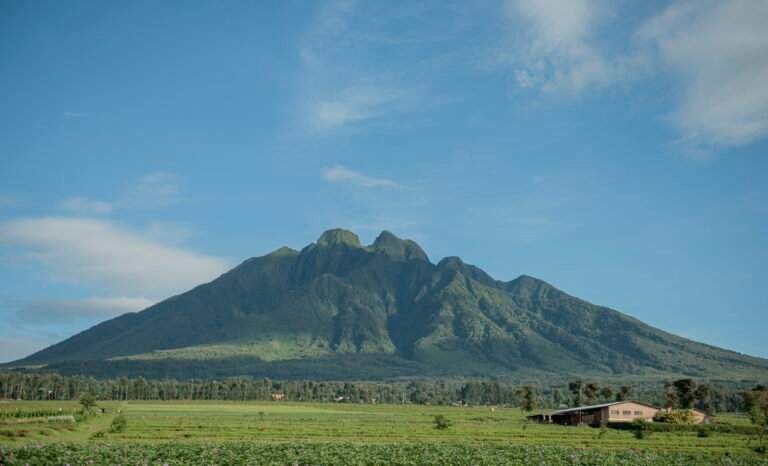


Two decades ago, Rwandan coffee was an anonymous commodity — sold in bulk, blended into supermarket brands, and priced as if its origin did not matter. Today, beans from the hills of Gakenke and Nyamasheke are served in specialty cafés from Tokyo to Toronto, and a single lot can fetch prices that would have seemed absurd in the 1990s.
The turnaround began after the 1994 genocide, when the government and international partners rebuilt the sector around a single idea: quality over volume. Instead of exporting every cherry at any price, Rwanda invested in washing stations, training, and market access. Farmers were organised into cooperatives, and the cooperatives learned to negotiate.
Why Rwandan coffee tastes like nowhere else
The country’s growing conditions do most of the work. Most coffee is grown between 1,700 and 2,000 metres, where cool nights slow cherry maturation and concentrate sugars. Volcanic soils add minerality. And the dominance of fully washed processing — where cherries are pulped, fermented, and dried with unusual care — produces the clean, bright cup with floral and citrus notes that buyers associate with Rwanda.
Put your brand in front of 12,000 engaged readers
Display · Newsletter · Sponsored features
Varieties matter too. Bourbon varieties, introduced during the colonial period, still dominate, prized for sweetness and complexity. Newer plantings of hybrid varieties are being tested for disease resistance as climate pressure grows.

Cooperatives changed the economics
Rwanda’s coffee economy is built on roughly 400,000 smallholder families, most farming less than a hectare. Individually, they had no leverage. Collectively, through cooperatives like Dukunde Kawa and Buf Café, they own processing infrastructure, hire Q-graders, and sell directly to roasters who pay premiums for traceability.
Every cup tells a story of resilience. When you drink Rwandan coffee, you’re tasting the work of thousands of women who rebuilt this industry from nothing.
Competitions have amplified that shift. Rwanda’s Cup of Excellence has repeatedly set record prices for top lots, and the publicity lifts the whole sector — a farmer who places well can fund a house, a school, or a second washing station.

The roastery boom
The newest chapter is happening at home. For years Rwanda exported green beans and imported roasted coffee. That is changing. Kigali now has a growing cluster of roasteries — Question Coffee, Bourbon Coffee, and a wave of smaller operations — serving espresso, pour-over, and cold brew made from beans roasted within the city.
Training has followed. Barista courses, cupping sessions, and coffee academies are producing a generation of Rwandan professionals who can talk about fermentation profiles and extraction yields as fluently as anyone in Melbourne or Oslo.
- What to try: a washed Bourbon from Nyamasheke for citrus and tea-like clarity
- Where to taste: cupping sessions at Kigali roasteries, usually bookable by the hour
- When to visit: the harvest runs roughly March to June, with washing stations at their busiest

The challenges ahead
Coffee is not a guaranteed success story. Climate change threatens suitable growing zones, coffee leaf rust remains a risk, and the average age of farmers is rising as young people leave the hills. Price volatility can wipe out a season’s gains, and access to finance for replanting remains limited.
What Rwanda has built, though, is a model: quality, traceability, and collective ownership. It is the same playbook the country is now applying to tea, horticulture, and specialty food — and it began with a cherry, picked carefully, and sold with pride.